Turquoise Bracelet Benefits: Meaning, Lore and How to Wear It
Turquoise might be the oldest stone people still wear for luck. It turns up in Egyptian tombs, Persian palaces and Southwest silverwork, and today it's one of the easiest crystal bracelets to wear with a pair of jeans and a white T-shirt.
If you're wondering what a turquoise bracelet actually does, the honest answer has two parts: what people have believed about it for thousands of years, and what the stone really is. This guide covers both, plus the practical things most articles skip, like why turquoise changes color over time and what it means when a bracelet breaks.
Quick answer: A turquoise bracelet is traditionally worn for protection, especially while traveling, and is associated with calm communication, friendship and good fortune. It's a traditional December birthstone and the stone we pair with Sagittarius. These benefits come from cultural tradition, not science, so think of the bracelet as a meaningful reminder rather than a remedy.
In this guide
- What Is Turquoise?
- Turquoise Bracelet Benefits: What the Traditions Say
- Which Hand Should You Wear a Turquoise Bracelet On?
- What Does It Mean When a Turquoise Bracelet Breaks?
- How to Tell If a Turquoise Bracelet Is Real
- How to Care for a Turquoise Bracelet
- Who Might Want to Skip a Turquoise Bracelet
- Turquoise Bracelets to Start With
- Frequently Asked Questions
- Keep Exploring
What Is Turquoise?
Turquoise is a hydrated copper and aluminum phosphate. It forms in dry places where copper-rich groundwater seeps down through rock, which is why the best-known sources are deserts: Iran, the American Southwest (Arizona and Nevada in particular) and parts of China. Copper gives the stone its sky blue, and iron pushes it toward green.
A few facts matter once the stone is sitting on your wrist:
- It's fairly soft. Turquoise rates 5 to 6 on the Mohs hardness scale, according to the Gemological Institute of America (GIA). That's softer than quartz, so it can scratch.
- It's porous. The stone can absorb skin oils, lotion and perfume, which is why its color can slowly shift over the years.
- The veins are part of the stone. The brown or black lines you sometimes see are called matrix, small traces of the rock it formed in. Some people love a spiderweb pattern. Others prefer clean, even blue.
- The name is a travel story. "Turquoise" comes from the French for "Turkish stone", because it reached Europe along Turkish trade routes.
Turquoise Bracelet Benefits: What the Traditions Say
Here's what turquoise has meant to different cultures, and what people who wear it today say they get from it. We've kept the history and the modern crystal beliefs separate, so you can see where each idea comes from.
1. A traveler's stone of protection
This is the oldest and most consistent belief about turquoise. Persian and Turkish horsemen wore it as an amulet and on bridles, trusting it to protect them from falls. The idea carried forward, and turquoise is still a popular gift for someone heading off on a big trip. A bracelet is an easy way to carry that symbol, since it stays with you on planes, trains and long drives.
2. Calm, honest communication
In modern crystal practice, turquoise is linked to the throat chakra, the energy center associated with speaking clearly and kindly. People who wear it for this reason often say it works as a small cue to pause before they react. That's a habit worth building with or without a stone, and a bracelet you can see and touch makes it easier to remember.
3. Friendship and good fortune
Turquoise has a long history as a gift rather than something you buy for yourself. One old saying holds that turquoise brings the most luck when someone gives it to you. Whether or not you believe that, it makes a thoughtful present for a close friend, especially one with a December birthday.
4. Balance and grounding
The mix of sky blue and earthy matrix is why many crystal practitioners describe turquoise as a balancing stone, one that bridges calm and practical energy. Wearers tend to describe it as steadying rather than energizing, which makes it a good everyday stone for busy weeks.
5. A December birthstone and a Sagittarius stone
GIA lists turquoise as a traditional birthstone for December and the gem of the 11th wedding anniversary. In zodiac jewelry, we pair it with Sagittarius, the sign of travelers and optimists, which fits its protective journey lore nicely. You can see those pieces in our Sagittarius birthstone rings.
6. A link to living craft traditions
In the American Southwest, turquoise has been central to jewelry made by Navajo (Diné), Zuni and Pueblo artists for generations. For many wearers the meaning is cultural and personal rather than metaphysical. If that's what draws you to turquoise, buy directly from Native artists. The federal Indian Arts and Crafts Act makes it illegal to sell work as Native-made when it isn't, so reputable sellers are clear about who made each piece.
| Benefit | Where the belief comes from | A practical way to use it |
|---|---|---|
| Protection on journeys | Persian and Turkish amulet traditions | A meaningful gift before a big trip |
| Calm communication | Modern throat chakra practice | A reminder to pause before you speak |
| Friendship and luck | Folk gifting customs | A December birthday or friendship gift |
| Balance | Modern crystal practice | An easy everyday stone to stack with others |
Which Hand Should You Wear a Turquoise Bracelet On?
In crystal tradition, the left wrist is the receiving side and the right wrist is the giving side. Turquoise is usually worn on the left if you want its calm and protection for yourself, and on the right if your intention points outward, like speaking up in a meeting or a hard conversation. Left-handed people often flip this so the non-dominant hand receives.
Honestly, comfort matters more than the rule. If the bracelet sits better on your right wrist next to your watch, wear it there. Our which-wrist guide goes into more detail.
What Does It Mean When a Turquoise Bracelet Breaks?
This is one of the most searched turquoise questions. The folklore answer is that the stone took on something it was protecting you from, so it has done its job. Some people gather the beads, cleanse them and restring them. Others pass the stone on or return it to the earth.
The practical answer is simpler: stretch cord wears out. Lotion, water and rolling a bracelet on and off all weaken elastic over time. If a beaded bracelet snaps, collect the beads, have it restrung, and roll it onto your wrist next time instead of stretching it over your knuckles.
How to Tell If a Turquoise Bracelet Is Real
Turquoise is one of the most imitated stones on the market. Common stand-ins include dyed howlite and magnesite (white stones colored blue), reconstituted turquoise (powder bound with resin) and plain plastic. A few checks help:
- Look closely at the veins. In dyed howlite the dark lines often sit slightly sunken, and the dye can collect in cracks and drill holes.
- Be wary of very low prices. Bright, perfectly even blue beads at a bargain price are a common warning sign.
- Ask about treatment. A lot of turquoise sold today is stabilized, which means resin is added to harden the stone and set its color. That's an accepted practice, but a good seller should be willing to tell you.
- Watch for trade names. "African turquoise" is a name used for a speckled green-blue jasper, not mineral turquoise. It's a lovely stone in its own right, just a different one. If you want true turquoise, check the stone name on the listing.
For more checks that work across all stones, see our guide to buying genuine gemstones online.
How to Care for a Turquoise Bracelet
- Put it on last, after lotion, sunscreen and perfume.
- Take it off before showering, swimming, washing dishes or working out.
- Wipe it with a soft, dry or barely damp cloth. Skip ultrasonic cleaners, steam and harsh chemicals.
- Keep it out of long, direct sun and heat, which can dry the stone and fade its color.
- Store it on its own, so harder stones and metal don't scratch it.
- If you like to cleanse crystals, choose gentle methods like moonlight, smoke or sound rather than salt or soaking.
Our jewelry care guide has more tips for silver and beaded pieces.
Who Might Want to Skip a Turquoise Bracelet
Turquoise isn't for everyone, and that's fine. You might be happier with something else if:
- You want a bracelet you never take off, even in the shower or pool. A harder stone like amethyst or clear quartz copes better with water.
- You'd be bothered by a stone that changes slightly over time. Turquoise develops a patina, and some people find that frustrating.
- You're looking for Native-made Southwest jewelry. Our turquoise pieces are handmade by our own team in Jaipur, India.
- You're hoping it will treat a health problem. Please don't rely on any crystal for that. Talk to a doctor.
Turquoise Bracelets to Start With
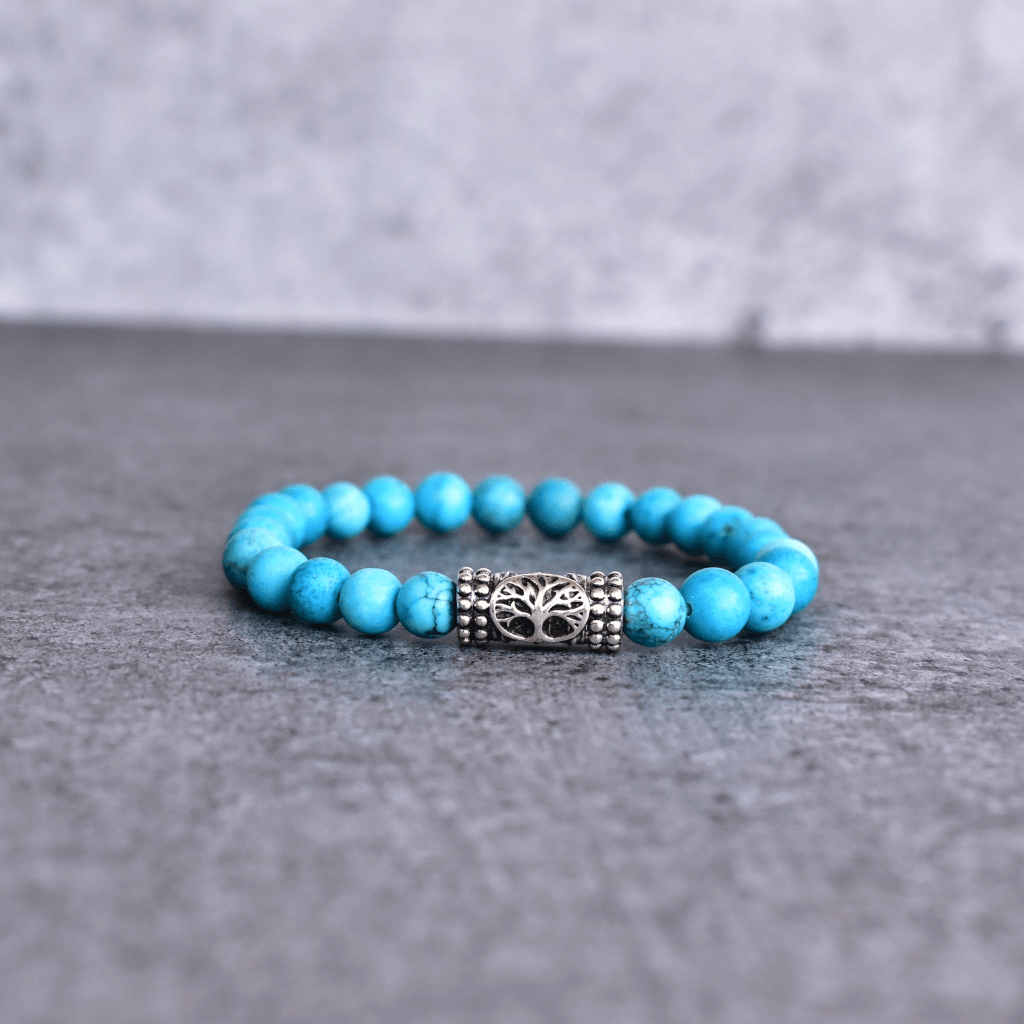
If you're choosing your first one, these are the bracelets we'd point you to. Each is handmade in Jaipur by the Keeta Luxury team, with details taken straight from the product listings:


You can browse every style in our turquoise jewelry collection, including turquoise necklaces. Prices were correct at the time of writing.
Frequently Asked Questions
What does a turquoise bracelet do?
In tradition, a turquoise bracelet is worn for protection, especially while traveling, and is associated with calm communication, friendship and good luck. These are cultural beliefs rather than proven effects, so most people wear it as a meaningful reminder of those intentions.
Can you wear a turquoise bracelet every day?
Yes, as long as you treat it gently. Turquoise is 5 to 6 on the Mohs scale and slightly porous, so take it off for showers, swimming and workouts, and put it on after lotion and perfume.
Which hand do you wear a turquoise bracelet on?
Traditionally the left wrist, to receive its calming and protective energy, or the right wrist if your intention is outward, like confident communication. Left-handed people often reverse this. Comfort is a perfectly good reason to choose either wrist.
Does turquoise bring good luck?
Turquoise has been treated as a lucky and protective stone in many cultures, and an old saying claims it's luckiest when received as a gift. There's no evidence it changes your luck, but it remains one of the most popular good-luck gifts.
Why is my turquoise changing color?
Turquoise is porous, so it can slowly absorb skin oils, lotion and perfume, which may darken it or shift it toward green. Heat and strong sun can also fade it. Stabilized turquoise changes less, and gentle care slows the process.
Is African turquoise real turquoise?
No. African turquoise is a trade name for a speckled green-blue jasper. It's a natural stone with its own appeal, but it isn't the mineral turquoise, so check the stone name on any listing if you want true turquoise.
Keep Exploring
If you like blue stones, read our guide to lapis lazuli bracelet benefits. For calmer, water-friendly options, see amethyst bracelet benefits and clear quartz bracelet benefits, or shop all women's crystal bracelets and men's crystal bracelets.
This article is for informational and cultural purposes only. The crystal benefits described here come from tradition and personal belief, not scientific evidence, and they are not a substitute for medical or mental health care.