Amethyst Bracelet Benefits: Meaning, Wrist Guide and Best Pairings
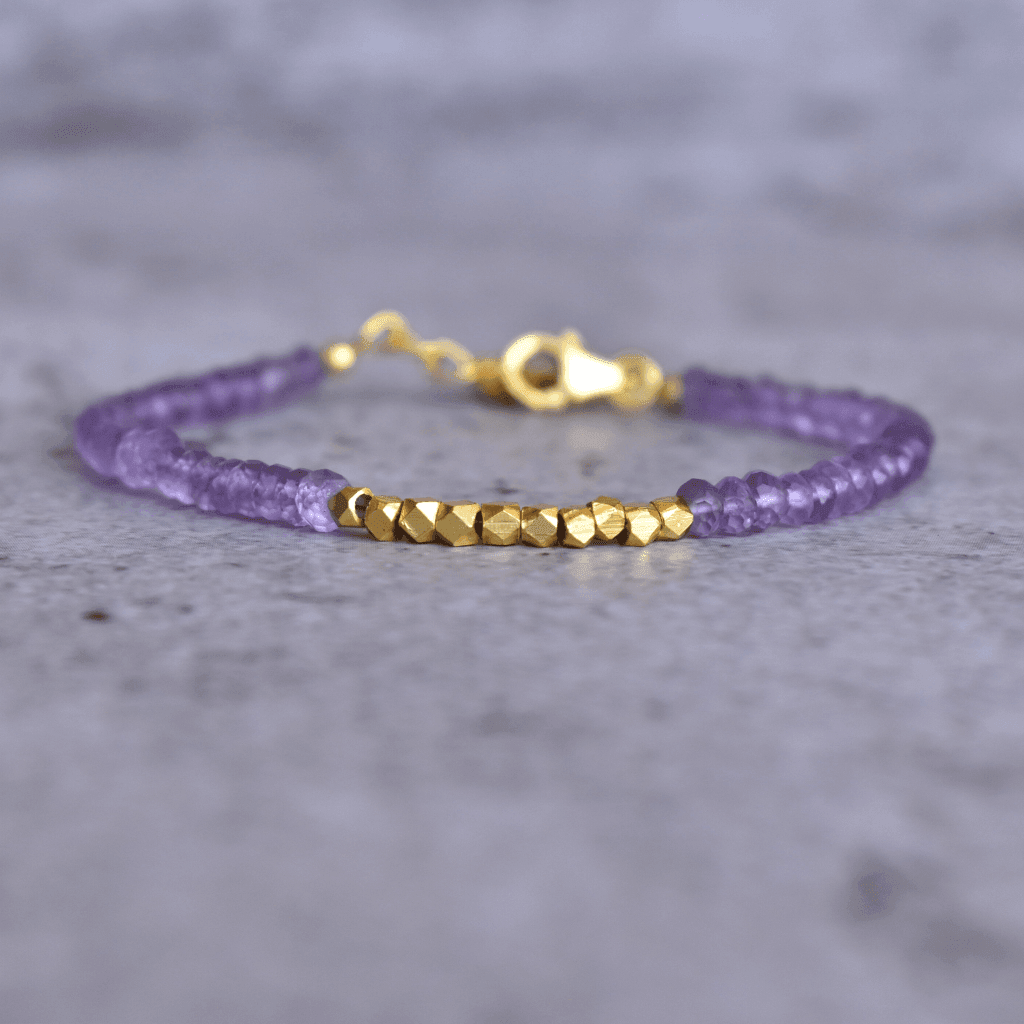
Amethyst is often the first crystal bracelet people buy, and it's easy to see why. The purple is gorgeous, the stone is tough enough for daily wear, and it comes with one of the best origin stories in the gem world: the ancient Greeks believed it could keep you sober.
Below, we cover what amethyst bracelets are traditionally worn for, which wrist to wear one on, the stones it pairs best with, and two things worth checking before you buy.
Quick answer: An amethyst bracelet is traditionally worn for calm, a clear head, restful sleep and spiritual focus. It's the February birthstone and the stone we pair with Aquarius. At 7 on the Mohs scale, it handles everyday wear well. Its benefits come from tradition and personal experience, not clinical evidence.
In this guide
- What Is Amethyst?
- Amethyst Bracelet Benefits: What the Traditions Say
- Which Wrist Should You Wear an Amethyst Bracelet On?
- The Best Stones to Pair With Amethyst
- How to Tell If an Amethyst Bracelet Is Real
- How to Care for an Amethyst Bracelet
- Who Might Want to Skip an Amethyst Bracelet
- Amethyst Bracelets to Start With
- Frequently Asked Questions
- Keep Exploring
What Is Amethyst?
Amethyst is purple quartz, the same mineral as clear quartz and citrine. Its color comes from traces of iron combined with natural radiation in the earth, and it rates 7 on the Mohs hardness scale, according to the Gemological Institute of America (GIA). That makes it one of the more durable stones you can wear on your wrist.
GIA notes that amethyst was once as expensive as ruby and emerald, until large deposits were found in Brazil in the 19th century. Today it's mined mainly in Brazil, Uruguay and several African countries, and our amethyst bracelets use stones from Brazil and Africa. Here's a fun fact: heat changes amethyst's color, and much of the citrine sold today is actually heated amethyst. We explain how to tell the difference in our guide to natural vs heat-treated citrine.
Amethyst Bracelet Benefits: What the Traditions Say
These are the reasons people have worn amethyst through history, and the reasons people give for wearing it today.
1. A clear head
The name comes from the ancient Greek amethystos, meaning "not drunk". People believed the stone could prevent intoxication, and some drank from amethyst cups. Nobody seriously expects a bracelet to do that now, but many people still like amethyst as a quiet symbol of moderation and clear choices.
2. Calm on busy days
This is the most common modern reason to wear amethyst. In crystal practice it's linked to the crown and third eye chakras and described as a soothing, quieting stone. People often say that touching the beads during a stressful moment works as a small grounding habit. That kind of tactile cue is genuinely useful, and amethyst makes it a pretty one. If stress is something you're dealing with a lot, our post on gemstone bracelets for stress and emotional balance covers other stones too, but a crystal is never a replacement for real support.
3. Restful sleep and dreams
Amethyst has a long association with sleep and dreaming, and many people keep one by the bed. There's no clinical evidence behind this, and a regular bedtime and less screen time will do more for your sleep than any stone. If you'd like the ritual anyway, take your bracelet off at night and set it on your nightstand. It's kinder to the stretch cord too.
4. Intuition and spiritual practice
Amethyst has been tied to spiritual life for centuries. GIA mentions that St. Valentine was said to wear an amethyst ring carved with Cupid, and that the Renaissance astrologer Camillo Leonardi wrote that amethyst "quickens intelligence". Today it's a favorite for meditation, journaling and prayer, often worn as a reminder to slow down and listen to yourself.
5. A February birthstone and an Aquarius stone
Amethyst is the birthstone for February and, per GIA, the gem for the 6th and 17th wedding anniversaries. In zodiac jewelry, we pair it with Aquarius, which makes it a natural birthday gift for anyone born in late January or February. See our Aquarius birthstone rings.
| Your intention | Traditional wrist | A good stone to pair with |
|---|---|---|
| Calm on busy days | Left | Rose quartz |
| Clear thinking at work | Either | Clear quartz or lapis lazuli |
| Motivation with balance | Right | Citrine |
| Grounding and protection | Right | Black onyx |
| Rest and reflection | Off at night, by the bed | On its own |
Which Wrist Should You Wear an Amethyst Bracelet On?
Amethyst is usually worn on the left wrist, which crystal tradition treats as the receiving side, because most people wear it for calm they want to take in. If you're pairing it with an energizing stone like citrine, the right wrist works too. Left-handed? Many people simply swap the two. Our which-wrist guide walks through all of it, and the short version is that the wrist matters less than wearing it at all.
The Best Stones to Pair With Amethyst
Amethyst plays well with others, which is why so many of our bracelets mix it with a second stone. These are the most popular combinations and what each is traditionally meant to bring:
- Amethyst and rose quartz: calm plus self-love, and the most popular pairing we make. Try the Lavender Dreams bracelet ($22) or the Aura Glow bracelet ($21). Our rose quartz bracelet guide explains that stone in more depth.
- Amethyst and citrine: calm paired with optimism and drive. The two even grow together naturally in Bolivia as a stone called ametrine. See the Hamsa Om Citrine and Amethyst bracelet ($22).
- Amethyst and clear quartz: clear quartz is believed to amplify the stones around it. The Love Amethyst and Clear Quartz bracelet uses 7 to 8 mm beads ($22).
- Amethyst and black onyx: a calm stone with a grounding one, popular with men. See the Spiritual Awareness bracelet ($22).
- Amethyst with an evil eye charm: for people who like a protective symbol too. The Warding Watch Amethyst bracelet pairs 4 mm beads with a sterling silver evil eye ($30).


How to Tell If an Amethyst Bracelet Is Real
- Look for natural variation. Real amethyst beads usually vary a little in depth of color, and some show uneven patches or zones of purple. A strand of perfectly identical, flawless beads at a very low price deserves a second look.
- Check for bubbles. Tiny round bubbles inside a bead are a classic sign of glass.
- Feel the temperature. Quartz feels cool against the skin and warms slowly. Glass and plastic warm up almost straight away.
- Watch for dye. Dyed quartz often shows color concentrated in cracks or around drill holes.
- Know the limits. Lab-grown amethyst exists and is chemically the same as natural, so only a gem lab can say for certain. Buying from a seller who states the stone's origin is the simplest safeguard.
Our guide to buying genuine gemstones online covers this in more detail.
How to Care for an Amethyst Bracelet
- Keep it out of long, direct sunlight and heat. Amethyst can fade over time with strong light, so a sunny windowsill isn't a good place to store it.
- The stone itself is fine with a quick rinse, but stretch cord dislikes soaking, so remove it before swimming or showering.
- Wipe it with a soft cloth, and avoid perfume and household chemicals on the beads and silver.
- Store it separately from harder stones and from chains that could scratch the silver.
See our jewelry care guide for silver care tips.
Who Might Want to Skip an Amethyst Bracelet
- If you want an energizing, get-up-and-go stone, amethyst is the wrong mood. Look at citrine, tiger eye or garnet instead.
- If you're hoping a bracelet will fix insomnia or anxiety, please speak with a doctor or therapist. A crystal can be a nice part of a routine, never a treatment.
- If you work with your hands all day, beaded stretch bracelets take a beating. A slim chain style may last longer.
Amethyst Bracelets to Start With
These single-stone styles are good places to begin. Every piece is from Keeta Luxury, and the details come from the product listings:


Browse the full amethyst jewelry collection for rings, earrings and necklaces too. Prices were correct at the time of writing. For more on the stone itself, read our amethyst jewelry meaning and buying guide.
Frequently Asked Questions
What does an amethyst bracelet do?
In crystal tradition, an amethyst bracelet is worn for calm, clear thinking, restful sleep and spiritual focus. These are beliefs rather than proven effects, and most people wear it as a calming reminder and a beautiful piece of jewelry.
Which hand should I wear an amethyst bracelet on?
Traditionally the left wrist, the receiving side, because amethyst is mostly worn for calm you want to take in. The right wrist is fine too, especially when amethyst is paired with an energizing stone like citrine.
Can I wear an amethyst bracelet every day?
Yes. Amethyst is 7 on the Mohs scale, so it's durable for daily wear. Take it off for swimming and showers to protect the cord and silver, and keep it out of strong sunlight so the color doesn't fade.
Can I sleep with an amethyst bracelet on?
You can, but it's gentler on the stretch cord to take it off. Many people place it on the nightstand instead, which keeps the bedtime ritual without the wear.
Does an amethyst bracelet have side effects?
There are no known physical side effects from wearing amethyst. In crystal tradition, some people find it too calming when they need energy, in which case they switch to a brighter stone for that day.
Can you wear amethyst and rose quartz together?
Yes, it's one of the most popular pairings. Amethyst is associated with calm and rose quartz with self-love, so together they're often worn for emotional balance. You can wear them as one mixed bracelet or stack two.
Keep Exploring
Pair this guide with clear quartz bracelet benefits and rose quartz bracelet benefits, or read about turquoise bracelets if you love a bolder color. You can also shop all women's crystal bracelets and men's crystal bracelets.
This article is for informational and cultural purposes only. The crystal benefits described here come from tradition and personal belief, not scientific evidence, and they are not a substitute for medical or mental health care.