Article: November Birthstones: Citrine and Topaz Meaning and Gift Guide
November Birthstones: Citrine and Topaz Meaning and Gift Guide
If you're shopping for a November birthday, you get two birthstones to choose from instead of one. Topaz and citrine both come in the warm, golden colors people connect with late autumn, and for centuries they were mistaken for each other. They're very different stones, though, and the difference matters once you're picking a ring someone will wear every day.
This guide covers where the two November birthstones come from, what each one traditionally means, how to tell them apart and which makes the better gift for the person you have in mind. You'll also find our picks from the citrine and blue topaz collections, all priced at $50 or less.
Quick answer: November has two birthstones: topaz, the traditional stone, and citrine, which was added to the US list in 1952. Citrine is a yellow to orange quartz that's durable and affordable. Topaz comes in many colors, and blue is the one you'll see most in jewelry today. In folklore, both were said to bring strength and calm a quick temper.
In this guide
What Are the November Birthstones?
The modern US birthstone list gives November two stones: topaz and citrine. Topaz was November's only stone when American jewelers published the first standardized birthstone list in 1912. Citrine joined it in 1952, when that list was revised.
The pairing has a history behind it. For most of recorded history, almost any yellow gemstone was called topaz, so citrine and topaz were treated as one stone. Gemologists now know they're unrelated minerals. Topaz is its own mineral species, an aluminum silicate, while citrine is a variety of quartz, the same mineral as amethyst and clear quartz.
If you want the bigger picture on why some months have two or even three stones, our guide to modern vs traditional birthstones explains how the lists changed over time.
Citrine vs Topaz at a Glance
| Feature | Citrine | Topaz |
|---|---|---|
| Mineral | Quartz | Topaz, an aluminum silicate |
| Colors | Pale yellow to brownish orange | Colorless, blue, yellow, orange, pink, violet, brown, rarely red |
| Mohs hardness | 7 | 8 |
| Toughness | Good | Poor, can chip or crack with a hard knock |
| Common treatment | Most is heat-treated amethyst | Most blue topaz is irradiated and heated colorless topaz |
| Ultrasonic cleaner | Usually fine | Avoid |
| Anniversary gem | 13th | 4th (blue topaz) and 23rd (Imperial topaz) |
Hardness, toughness, treatment and care details come from the Gemological Institute of America (GIA).
What surprises most shoppers is that the harder stone isn't the tougher one. Topaz resists scratches better than citrine, but it can chip or crack if it takes a sharp knock. Citrine is softer yet holds up well to everyday bumps, which often makes it the more forgiving choice for a ring worn daily.
Citrine Meaning and Lore
Citrine takes its name from citron, the French word for lemon, which suits its sunny shades. It shows up in Roman jewelry and became popular again in Victorian Scotland, where it was set into traditional Scottish pieces.
Because people mistook it for topaz for so long, citrine inherited topaz's folklore, including the belief that it could soothe a quick temper and calm the person wearing it. Modern crystal traditions add their own layer and call it a stone of joy and abundance. Some crystal sellers call it the merchant's stone, after the custom of keeping one near the cash register for good business.
One honest note before you buy: according to the GIA, most citrine on the market is amethyst that has been heated to turn it yellow or orange. Natural, unheated citrine does exist, from places like Bolivia's Anahí mine, but it's much rarer. Heat treatment is permanent and doesn't make the stone fake, but you deserve to know what you're getting. We explain how to tell the difference in our guide to natural vs heat-treated citrine, and you can read more about its traditional uses in our citrine benefits guide.
Topaz Meaning and Lore
The name topaz may come from tapas, the Sanskrit word for fire, or from the Greek topazos. The ancient Greeks believed topaz gave the wearer strength. In Europe from the 1300s to the 1600s, people thought it could ward off magic and dispel anger, and in India it was traditionally worn above the heart for long life, beauty and intelligence.
The most prized color is Imperial topaz, a pinkish orange said to be named after the Russian royal family, who claimed the finest stones from the Ural Mountains. In everyday jewelry, though, you'll mostly see blue.
Here's what many product pages leave out: nearly all blue topaz starts as colorless topaz and gets its sky, Swiss or London blue shade from irradiation and heating. The GIA describes the result as permanent. It's still real topaz, and topaz in any color counts as a November birthstone, but naturally deep blue topaz is very rare. For more on its meaning, see our blue topaz meaning and properties guide.
Which November Birthstone Should You Give?
Start with the person, not the stone. A few quick rules make the choice easy:
- Choose citrine for a ring they'll wear every day. Its good toughness makes it the safer pick for hands that bump into desks, car doors and kitchen counters.
- Choose citrine for warm tones. Its golden color flatters gold jewelry and fall wardrobes in camel, cream and brown.
- Choose blue topaz for someone who wears cool colors or mostly silver. Its clear blue looks crisp and modern next to white metal.
- Choose blue topaz in earrings or a pendant if you love its sparkle but worry about chips. Pieces that hang away from everyday knocks last longest.
- Choose topaz if tradition matters to them. It was November's original birthstone, so it suits someone who likes the history behind a gift.
- Can't decide? Give both. Citrine studs with a blue topaz pendant, or the other way around, covers both November stones.
November Birthstone Gift Ideas Under $50
Everything below comes from the Keeta Luxury citrine and blue topaz collections and costs $50 or less, so it works for a birthday, a Thanksgiving visit or an early holiday gift. The rings, earrings and necklaces are set in 925 sterling silver or 14K gold vermeil over silver. Prices are current as of November 2026.
Citrine gifts
 Tiny Star Citrine Studs5 mm round citrine, 925 sterling silver$25Shop now ›
 Leaf Sunshine Citrine Necklace8 mm round citrine, 14K gold vermeil over silver$32Shop now ›
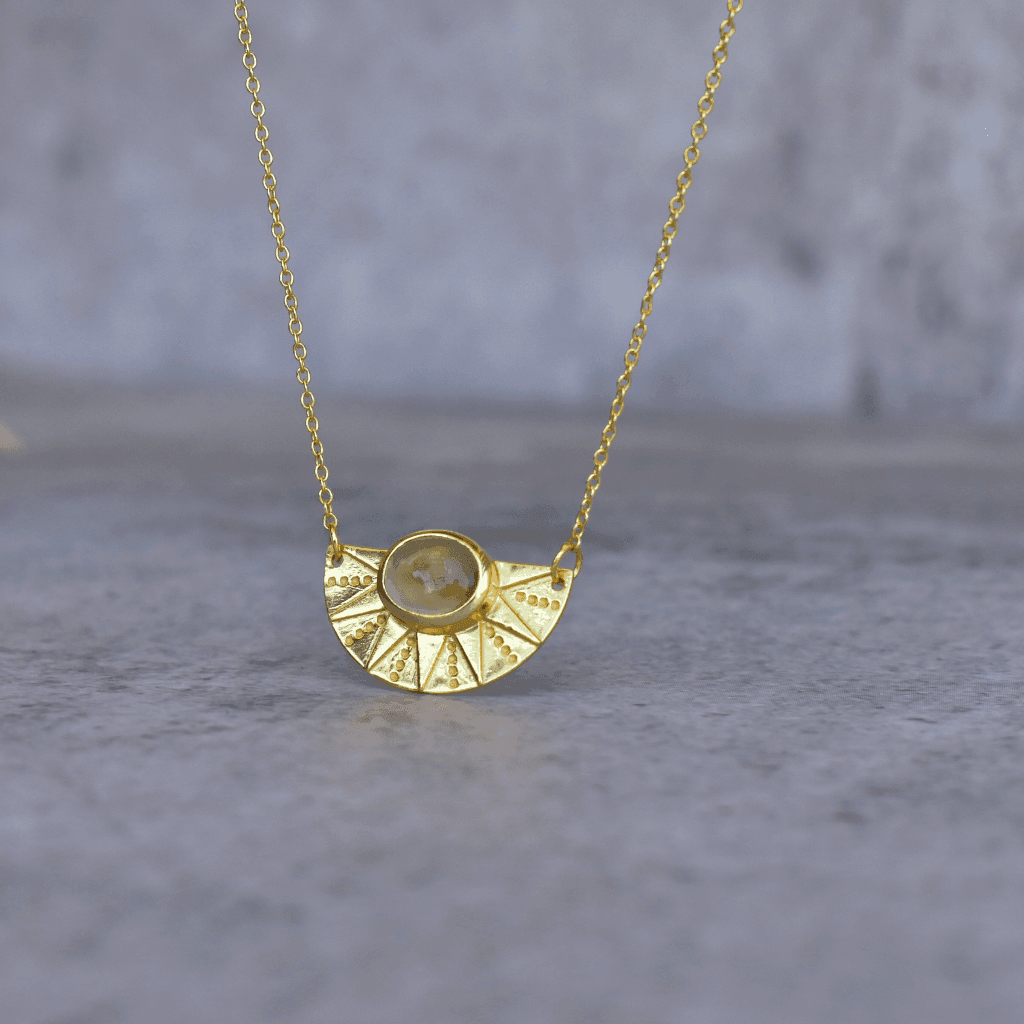
 Sunrise Flower Citrine Necklace8x10 mm oval citrine, 14K gold vermeil over silver$35Shop now ›
 Solitaire Square Citrine Ring6 mm square citrine, 925 sterling silver$42Shop now ›
 Raw Elegance Citrine RingRaw citrine, 9 to 12 mm, 925 sterling silver$43Shop now ›
 Golden Gaze Citrine Bracelet8 mm citrine beads with an evil eye charm$22Shop now ›
See every piece in the citrine jewelry collection.
Blue topaz gifts
 Topaz Passion Blue Topaz Earrings6x4 mm emerald-cut blue topaz, 925 sterling silver$38Shop now ›
 Evil Eye Blue Topaz Necklace6 mm round blue topaz, 14K gold vermeil over silver$35Shop now ›
 Nature Skin Blue Topaz Necklace9x6 mm pear blue topaz, 925 sterling silverFrom $40Shop now ›
 Dainty Breeze Blue Topaz Ring5 mm round blue topaz, 925 sterling silver$45Shop now ›
 Azure Delight Blue Topaz Ring6 mm square blue topaz, 925 sterling silver$46Shop now ›
 Oceanic Breeze Blue Topaz Ring7 mm round blue topaz, 925 sterling silver$50Shop now ›
See every piece in the blue topaz jewelry collection. Buying a ring as a surprise? Compare a ring she already wears against our ring size guide, or choose earrings or a necklace so size isn't a worry.
How to Care for Citrine and Topaz
- Clean both with warm, soapy water and a soft brush, then dry them with a lint-free cloth.
- Skip the steam cleaner for both. High heat can crack citrine and cause internal breaks in topaz.
- Ultrasonic cleaners are usually fine for citrine, but keep topaz out of them.
- Take a topaz ring off before the gym, gardening or moving furniture, since a hard knock can chip it.
- Store pieces separately in a soft pouch. Both stones are hard enough to scratch softer gems like opal and turquoise.
- Keep yellow and brown topaz out of long stretches of hot sun, which can fade some stones over time.
Who Might Skip These Stones
These are lovely stones, but they aren't the right gift for everyone:
- Anyone set on untreated color. Most citrine is heated amethyst and most blue topaz is irradiated. If natural color matters, look for a seller who discloses treatment or a stone with a lab report.
- People who are hard on their hands. A topaz ring may chip over years of daily knocks. Citrine, or topaz in earrings or a pendant, is the safer choice.
- Someone who only wears cool or muted colors. Golden citrine may end up in a drawer. Blue topaz, moonstone or black onyx may suit them better.
- Anyone hoping a stone will solve a health or money problem. The meanings in this guide come from folklore and personal belief, not science.
Frequently Asked Questions
What are the birthstones for November?
November has two birthstones, topaz and citrine. Topaz is the traditional stone and has been on the US birthstone list since 1912. Citrine was added in 1952.
Is blue topaz a November birthstone?
Yes. Topaz in any color counts as a November birthstone. Golden and orange topaz are the traditional colors, while blue is the color you'll see most often in jewelry today. Most blue topaz gets its color from treating colorless topaz with irradiation and heat.
Which is better, citrine or topaz?
Neither is better overall. Topaz is harder, at 8 on the Mohs scale compared with 7 for citrine, so it resists scratches better. Citrine has better toughness, so it handles everyday knocks well. Choose by color and by how the piece will be worn.
Is heat-treated citrine real citrine?
Yes. Heat-treated citrine is real quartz, usually amethyst that was heated to turn it yellow or orange, and the color change is permanent. Natural, unheated citrine is much rarer, and an honest seller should tell you which one you're buying.
What does the November birthstone symbolize?
In folklore, topaz was believed to bring strength and calm anger. Citrine, which was mistaken for topaz for centuries, picked up similar beliefs about soothing the temper, and modern crystal traditions link it with joy and abundance. These meanings are cultural, not scientific.
Can you wear citrine and topaz together?
Yes. Golden citrine and blue topaz contrast nicely, and wearing one of each is an easy way to celebrate both November birthstones.
This article is for informational and cultural purposes only. The meanings described here come from tradition and personal belief, not scientific evidence, and they are not a substitute for medical or mental health care.